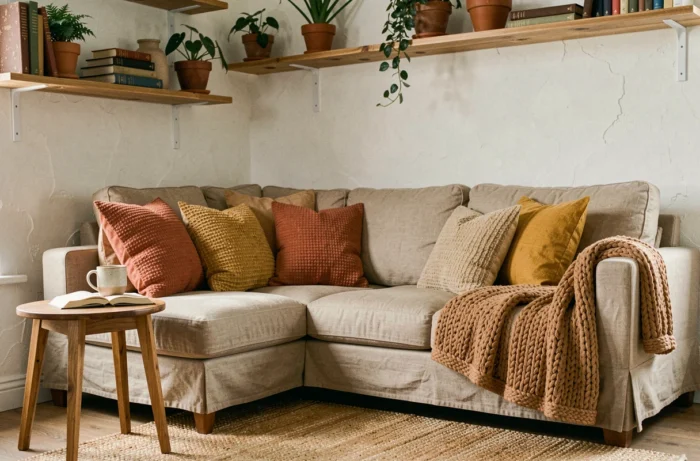
A warm interior does not depend on an accumulation of decorative objects. It is built through practical choices about materials, lighting and how space is arranged. Every room in the home can become more comfortable and functional without major renovations, as long as you understand how these three elements work together.
Thermal mass and materials: comfort starts with surfaces
Interior design is often reduced to a question of aesthetics. Yet the materials you choose have a direct effect on how warm or cool a room feels, in both summer and winter.
Solid wood, natural stone and polished concrete have high thermal mass: they absorb heat during the day and release it slowly. A terracotta tile floor in a south-facing living room regulates temperature better than a thin synthetic floor covering.
Textile surfaces, on the other hand (rugs, thick curtains, wool cushions), do not store heat but help reduce the sensation of cold to the touch. Pairing a high-thermal-mass floor with textiles creates a balance: the room stays cool in summer, while surfaces remain pleasant to touch in winter.
This is rarely covered in conventional decorating advice. According to ADEME, external sun protection and airing rooms at night are practical ways to limit overheating, especially in exposed rooms or those beneath the roof. A room under the eaves that is poorly ventilated and decorated with heavy textiles can feel stifling as early as spring.
More resources on home design are available in the home section of 1 Blog 1 Jour, which regularly covers these everyday housing topics.
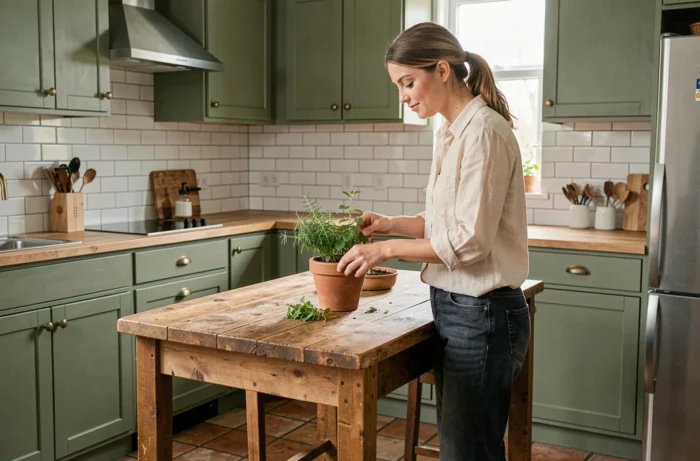
Functional living room lighting: layer your light sources
Lighting is the element that can change a room’s atmosphere most quickly. A single ceiling light creates flat, uniform illumination. To create a warm atmosphere, you need to layer at least three levels of light in every living space.
- Ambient lighting (a ceiling light or pendant) illuminates the room as a whole, but should be set to a moderate level, never full brightness.
- Task lighting (a table lamp or floor lamp) defines zones. Placed beside a sofa or reading chair, it creates a pool of light that adds depth to the living room.
- Accent lighting (string lights, candles, wall sconces) adds dimension. It draws the eye to a detail (a shelf, picture or alcove) without lighting the entire room.
Color temperature matters as much as brightness. Bulbs below 3,000 kelvins produce a soft, warm yellow light suited to living rooms and bedrooms. Above 4,000 kelvins, the light shifts toward cool white, which is useful over a kitchen worktop but less suited to a cosy atmosphere.
A dimmer on your main light can dramatically change the atmosphere of a living room without replacing any fixtures. It is one of the simplest and most effective ways to adjust the mood throughout the day.
Warm colors and wall decor: use them thoughtfully, not excessively
Warm color palettes (beige, terracotta, brown, ochre) are routinely recommended for making an interior feel cosier. The advice is sound, but how you apply it makes all the difference.
Painting all four walls terracotta in a medium-sized room can feel oppressive. A single accent wall is enough to transform how a space feels. The remaining walls, in off-white or light greige, provide visual breathing room and preserve brightness.
Textured wallpaper is an alternative to paint for an accent wall. Raised patterns (fluting, plant fibers, tactile finishes) add depth without imposing an overpowering color. This works particularly well in rooms with little natural light, because the texture catches and reflects light differently depending on the angle.
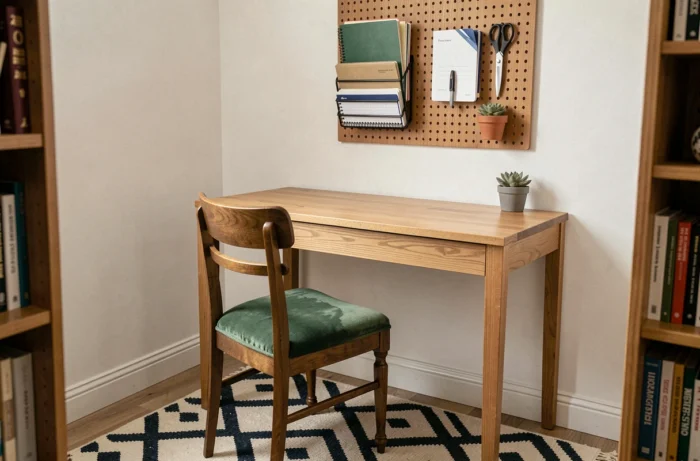
The ceiling is often overlooked. Painting it a shade slightly darker than the walls (by one tone) visually lowers the ceiling and enhances the feeling of being cocooned—an effect that works well in a living room or bedroom.
Space planning: organize activity zones in every room
How functional a home feels depends less on its size than on how the space is divided. Every room benefits from distinct zones, even in a small home.
In a living room, the sofa and rug define the relaxation area. A console table or low bookcase can visually separate it from a home office or children’s play area. Furniture can replace partitions without reducing natural light or restricting movement.
Vertical space is often underused. Wall shelves free up floor space and provide storage without encroaching on the living area. In an entryway, a bench with built-in storage serves two purposes (seating and storage) and keeps items from piling up on the floor.
- A low piece of furniture (sideboard, console table) separates two zones without blocking the view or the light.
- A rug visually defines the boundaries of a living area in an open-plan room.
- Baskets or storage boxes built into furniture help keep things tidy without adding extra pieces.
In open-plan living spaces, using consistent materials across zones (the same wood species, matching textile colors) brings the room together. Varying seat heights (a low sofa, stool and high-backed chair) adds visual rhythm while catering to different needs.
A functional interior reduces visual clutter, and clutter—more than a lack of decoration—is what keeps a room from feeling welcoming. Tidying is not decorating, but it is a prerequisite for making the decor work.
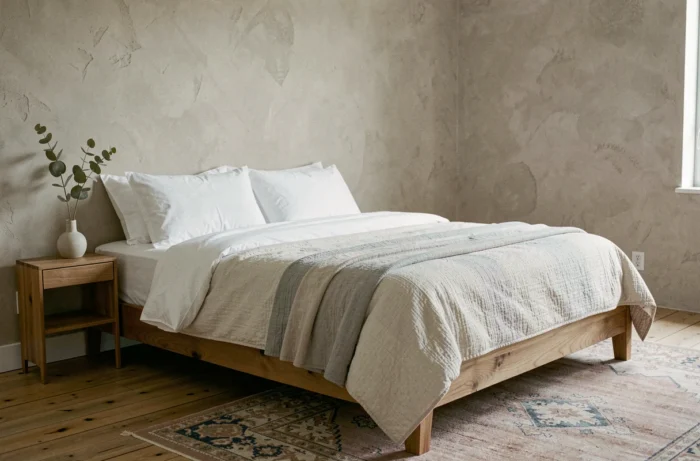
A home’s comfort comes from the interplay of surfaces, lighting and layout. Each of these three elements can compensate for the limitations of the others: thoughtful lighting enhances modest materials, while a clear layout makes a small room more livable than a large, poorly organized space. The easiest first steps to try are still the most accessible: a dimmer, a well-placed rug or a freshly painted wall.