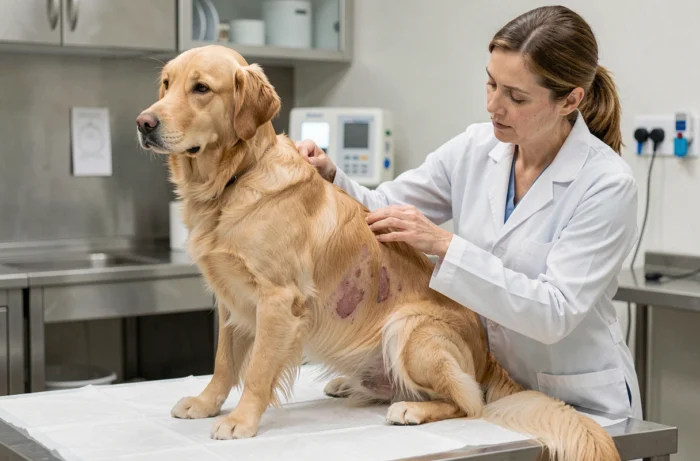
Skin problems in dogs (itching, dandruff, redness, dull coat) are among the most common reasons for veterinary visits. Switching dog food is often the first thing owners try. But a food labeled “for sensitive skin” is not a diagnostic tool: it may improve skin comfort without ever revealing the real cause of the problem. Understanding what these foods can and cannot do helps avoid months of unnecessary trial and error.
Itchy dogs: why switching food is not always enough
Itching is not necessarily caused by food. Skin infections (bacterial or fungal) can cause ongoing itching regardless of what a dog eats. Environmental atopic dermatitis (caused by pollen, dust mites, and other allergens) produces symptoms very similar to those of a food allergy.
A dog may also have several causes at the same time. In that case, switching food alone will only address part of the problem, if any. No improvement after a month on a new food does not mean the product is bad: it probably means the main cause lies elsewhere.
That is why a veterinary examination is the logical first step. A veterinarian can rule out infections, identify atopic dermatitis, and recommend an elimination diet if a food allergy is genuinely suspected. Buying dog food for sensitive skin makes sense once these possibilities have been assessed.

Elimination diet for dogs: the only reliable way to identify a food allergy
The standard approach to confirming a food allergy is an elimination diet followed by a controlled reintroduction. The idea is to feed the dog a source of protein and carbohydrates it has never eaten before for several weeks, then reintroduce its previous food to see whether the symptoms return.
Improvement on the new diet is not enough to confirm the diagnosis. The allergy is confirmed when symptoms return after the previous food is reintroduced. Without this step, it remains a matter of guesswork.
Blood and saliva tests are no substitute for an elimination trial
Tests marketed as detecting “food intolerances” through blood, saliva, or hair have not been validated as reliable diagnostic tools for food allergies in dogs. They can produce false positives and lead to unnecessarily restrictive diets. Only a food trial supervised by a veterinarian is considered reliable.
Food trials at home: how to avoid compromising the results
An elimination diet only works if the dog consumes absolutely nothing other than the food being tested. In practice, this is the most common point of failure. Treats, table scraps, chew products, supplements, and even some flavored medications can expose the dog to ingredients outside the diet.
In a household where several people interact with the dog, the risk of accidental exposure is real. A child giving the dog a piece of cheese, a partner offering a store-bought chew, or a visitor tossing it a treat: any of these can invalidate weeks of testing.
Here are some practical steps to make a food trial genuinely useful:
- Write a list of everything the dog can and cannot eat during the trial and post it in the kitchen. Everyone in the household should know the rules.
- Replace regular treats with pieces of the elimination diet food itself, or with a treat approved by the veterinarian that uses the same single protein source.
- Check the ingredients in any current medications with the veterinarian (flavored dewormers, coated tablets). Some treatments contain animal proteins that could compromise the trial.
- If there are other pets in the household, keep the dog away from their food bowls for the entire duration of the diet.
A properly conducted food trial usually lasts several weeks. How carefully these first weeks are managed determines whether the results will be useful.

Ingredients in sensitive-skin dog food: what to look for on the label
Whether your dog is on an elimination diet or you are simply looking for food suited to a dog with sensitive skin, there are several ingredients worth checking on the packaging.
Protein source
Food formulated for sensitive skin tends to use so-called “novel” or hydrolyzed proteins. A novel protein is one the dog has never eaten before (such as duck, venison, or insect protein). A hydrolyzed protein is broken down into fragments so small that the immune system does not recognize them as allergens. Both approaches have their merits, but the right choice depends on the dog’s dietary history.
Omega-3 and omega-6 fatty acids
These fatty acids help maintain the integrity of the skin barrier. Adequate omega-3 intake (from fish oil or flaxseed oil) may help reduce skin inflammation. The ratio of omega-6 to omega-3 matters as much as the overall amount: excess omega-6 without enough omega-3 to balance it can contribute to inflammation.
Free from certain additives
Artificial colors, chemical preservatives (BHA, BHT), and synthetic flavorings are not common allergens, but they may irritate the skin of dogs that are already sensitive. Grain-free formulas are not automatically better for the skin: grains cause food allergies in only a minority of dogs. Removing grains without an identified medical reason makes the diet more complicated without proven benefits.
When to reassess with your veterinarian instead of switching brands
Repeatedly switching dog food without a plan is the most common pitfall. Testing each new product for two weeks and then abandoning it yields no useful information and may even complicate a future elimination diet by expanding the list of proteins the dog has already eaten.
No improvement after a properly conducted food trial should prompt further diagnostic investigation, not another brand. The veterinarian can then look into environmental atopic dermatitis, an underlying infection, or a combination of factors.
If a dog’s skin does not improve despite an appropriate diet, it needs a dermatological assessment—not yet another bag of dog food. This distinction, simple as it may seem, can prevent months of frustration and unnecessary expense.