
Glass miniatures are not just simple decorative miniatures. They are technical containers whose manufacturing, standardized capacity, and uses have evolved over several centuries of glassmaking. Their format, generally between 2 cl and 5 cl, meets specific constraints of preservation, taxation, and marketing that we will detail.
Technical constraints of miniature glass molding
Producing a glass miniature requires a mastery of molding that the standard format does not demand. The reduction in scale amplifies every defect: a negligible air bubble in a 75 cl bottle becomes a critical point of fragility on a 3 cl flask.
The glass used for miniatures is predominantly soda-lime glass made by mechanical blowing. The working temperature remains the same as that for larger formats, but the cooling time (annealing) must be adjusted to avoid internal stresses in a thinner wall.
We observe that glass artisans are reinvesting in this miniature format. The hybridization movement between craftsmanship and industry, documented by trends in artisanal crafts in 2026, drives some workshops to offer mouth-blown miniatures, with intentional variations in color and thickness. These pieces stand out radically from industrial productions due to their unique character. To delve deeper into the history of miniatures on Naturel Web, the subject is addressed from a heritage and symbolic perspective.

Glass miniatures and alcohol container regulations
The miniature format is directly linked to the taxation of spirits. The capacity of these bottles is not arbitrary: it corresponds to regulatory thresholds that determine applicable excise duties and labeling obligations.
Below 5 cl, certain mandatory mentions differ from those imposed on standard formats. The volumetric alcohol content remains required, but the display methods are adapted to the reduced surface area of the label. This constraint pushes manufacturers to completely rethink the graphic design of their miniatures.
Environmental regulations add a layer of complexity. Glass, a theoretically infinitely recyclable material, poses a specific collection problem for very small formats. Miniatures often escape conventional sorting circuits due to their size, fueling a debate about their real ecological impact despite the nobility of the material.
Historical origins of miniatures: from apothecary bottle to duty-free
The direct ancestors of glass miniatures are medieval apothecary vials. These small containers were used to dose medicinal preparations, oils, or elixirs. Their stout shape and narrow neck aimed to limit evaporation and facilitate drop-by-drop dosing.
The shift to the world of spirits occurred in the 19th century, when distilleries understood the commercial interest of offering tasting samples. The small format allowed for the discovery of a product without committing the consumer to an expensive purchase.
The rise of commercial air transport then propelled miniatures into another realm. Airlines adopted these formats for in-cabin service, creating a lasting association between miniatures and travel. Duty-free amplified the phenomenon by offering miniature gift sets as accessible souvenirs.
Collectors and values of antique miniatures
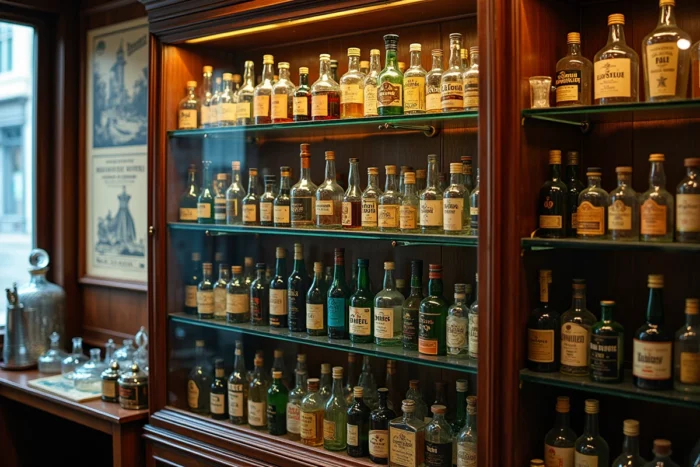
“Buticulamicrophilia” (the term for the collection of miniatures) is a structured field, with its fairs, catalogs, and values. The most sought-after pieces are miniatures from before the 1950s, recognizable by their thick glass, air bubbles, and labels printed in typography.
- Pre-war pressed molded glass miniatures often show pontil marks on the bottom, a sign of semi-artisanal production.
- Limited editions produced for events (world fairs, inaugurations) reach the highest values on the secondary market.
- Cognac and armagnac miniatures dominate the Francophone market, while miniature Scotch whiskies are the most traded internationally.
Customized glass miniatures: the B2B shift
Since 2023-2024, glass miniatures have seen a marked repositioning towards the professional market. They are increasingly integrated into customized corporate gift sets, in a brand’s colors, with logo, graphic charter, and dedicated message.
AtelierBox, specializing in customized gift baskets, illustrates this trend: mini formats of drinks, oils, or vinegars are presented as gifts that “transform a relationship into a memory.” The focus is on product storytelling and the perception of quality that glass brings compared to plastic.
This B2B shift imposes new constraints on the design of the container:
- The printing surface on glass or label must integrate a readable logo despite the small size, which directs towards direct screen printing on glass rather than paper labels.
- Resistance to shipping by postal parcel requires wall thicknesses greater than those of miniatures intended for retail sale.
- The choice of closure (screw cap, miniature cork, crimped cap) influences the premium perception and shelf life.
Most requested formats and capacities in B2B
The 5 cl format dominates professional orders. It offers the best compromise between usable printing surface, sufficient tasting volume, and unit production cost. The 2 cl remains confined to promotional samples distributed in large quantities, while the 10 cl, sometimes classified as a miniature according to catalogs, is more aimed at gourmet gift sets.
Glass remains the preferred material for high-end miniatures, where PET or aluminum serve fast-moving promotional segments. The transparency of glass, its weight in hand, and its perceived recyclability are selling points that plastic cannot replicate. For brands looking to establish a premium positioning, the choice of glass for a miniature is not aesthetic: it is strategic.