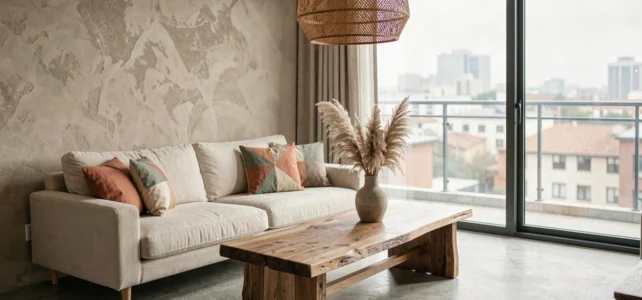
A sofa too large for the room, a pale light on the ceiling, white walls that haven’t changed since moving in: we all know that moment when the interior no longer matches our way of living. Modern decoration is not just about following trends seen on social media. It starts from a concrete observation, room by room, to correct what bothers us daily and create an atmosphere that lasts over time.
Materials and air quality: the invisible criterion of modern decor
We think about colors, shapes, layout, but rarely about what our furniture emits into the indoor air. European regulations on formaldehyde in furniture tightened significantly in 2026. Manufacturers must now integrate the “low emissions” constraint into their choice of materials. In practice, this means that choosing low-emission furniture protects your indoor air, not just your aesthetics.
When renovating a living room or a guest bedroom, checking the certifications of new furniture (panels, glues, finishes) is part of the decor project just like choosing the fabric. Solid wood furniture, natural oil finishes, or panels compliant with the new REACH standards limit daily exposure. This is a selection criterion to consider before falling in love with a model from a catalog.
To deepen your choices of furniture and layout, the Arno Déco guide details concrete options suited to different budgets and interior styles.
Warm color palettes and textures: leaving all-white without making mistakes
The current trend marks a clear retreat from cold grays and clinical whites. We are shifting towards so-called “warm neutrals” palettes: sandy beiges, muted terracotta, soft browns. This shift is not purely aesthetic. Warm shades reduce the feeling of coldness in poorly exposed rooms, a common problem in north-facing apartments.
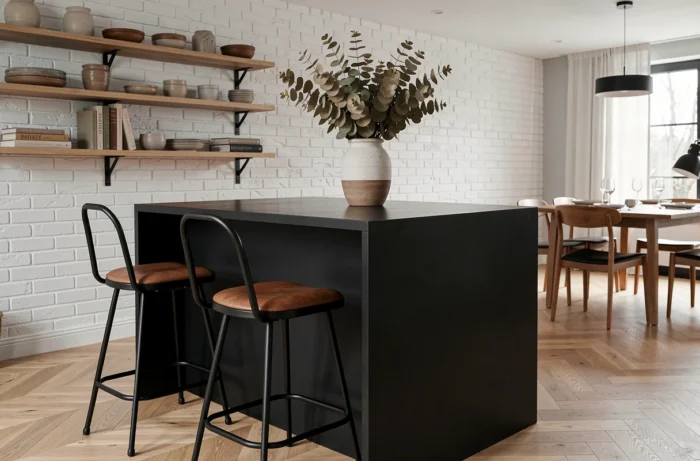
Painting a single wall in a deeper color is enough to visually restructure a space without overwhelming the volume. In a medium-sized living room, we target the wall behind the sofa or the one that holds the TV unit. The rest remains in a light neutral tone to maintain brightness.
Textures complement this color work. Darker wood, wrinkled linen, boucle wool on cushions, or a short-pile rug create what is called a tactile layering. The idea is not to accumulate, but to vary the materials on three levels: floor, seating, wall.
- A jute or textured wool rug on the floor to anchor the room and absorb sound
- Linen or corduroy cushions on the sofa to break the uniformity of the seating fabric
- A panoramic wallpaper or a fine-slat wood panel on a single wall to add depth without overloading
Modular furniture: designing an interior that changes with your needs
Remote work has permanently changed how we use a living room or a guest bedroom. A modular piece of furniture is better than two fixed pieces when the space serves as an office, dining room, and relaxation area. Feedback from the field converges: the demand for reconfigurable furniture is growing, driven by small spaces and the versatility of rooms.
Specifically, we are talking about repositionable shelves, foldable desks mounted on the wall, sofas with movable modules to open a passage or create a reading nook. Before buying, we measure the room and identify the two or three configurations actually used during the week. A quick floor plan, even drawn by hand, avoids the impulsive purchase of a too-deep piece of furniture that blocks circulation.
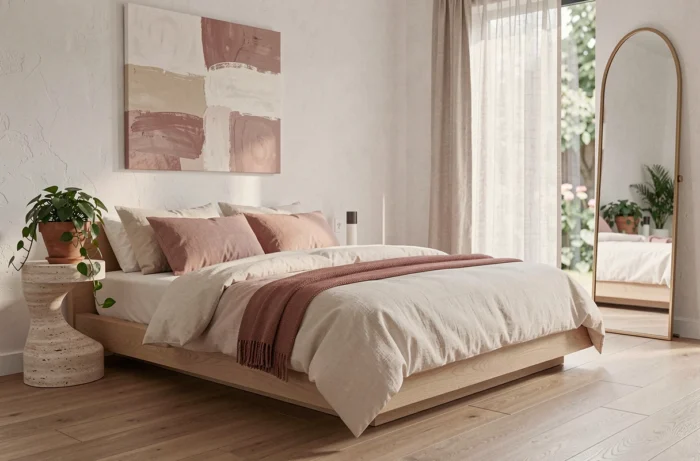
Opinions vary on the real interest of “transformable” furniture with complex mechanisms (retractable coffee tables, motorized wall beds). Their durability largely depends on the quality of manufacturing. A simple module that is moved by hand often ages better than a cheap articulated system.
Light and decorative objects: the two levers that change everything without renovations
Artificial light remains the weak point of most interiors. A single central ceiling light flattens volumes and creates unpleasant shadowy areas. Multiplying light sources at different heights transforms the atmosphere of a room in just a few hours.
We work on three layers. Ambient light (floor lamp or adjustable pendant), functional light (desk lamp, reading light near the sofa), and accent lighting (directional spotlight on a painting, discreet string lights on a shelf). Three well-placed light points are enough for a standard living room.
- Replace cold white bulbs with warm white bulbs to soften the atmosphere in the evening
- Place a mirror facing a window to redistribute natural light in a deep room
- Use a low table lamp on a side table rather than a recessed ceiling spotlight for less clinical lighting
On the decorative objects side, the sustainable trend leans towards fewer but more meaningful pieces. A thrifted object, a handmade pottery piece, an antique frame adds character without cluttering. Three well-chosen objects are better than a shelf overloaded with knick-knacks. We group objects into small sets of varied heights rather than scattering them across all available surfaces.
Transforming an interior with modern decoration means correcting specific irritants (indoor air, light, circulation) before thinking about style. A wall repainted in a warm tone, a piece of furniture repositioned to clear the passage, two lamps added in the right places: these simple gestures change the daily feeling more than a hasty complete makeover.